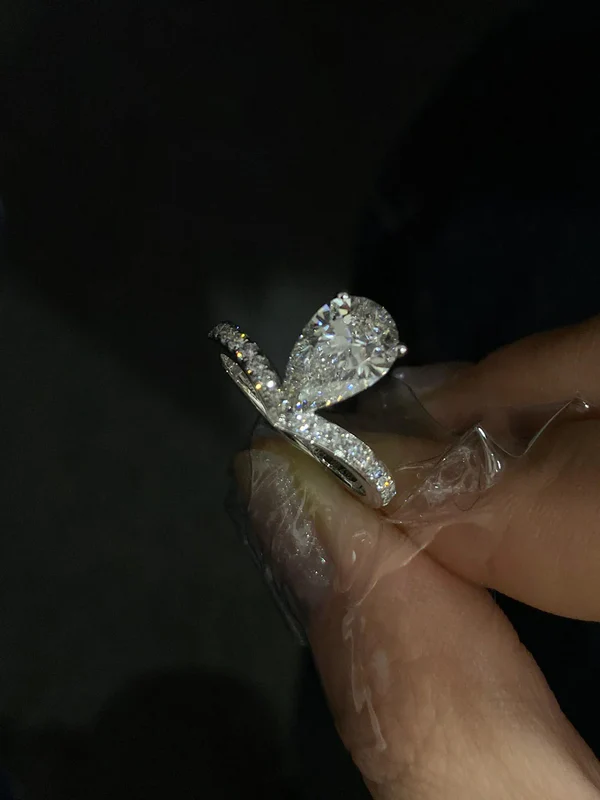
2 Carat Pear Brilliant Cut Lab-Grown Diamond Ring | D Color · VS1 · 18K White Gold
Elegant. Radiant. Designed for timeless brilliance and modern luxury.
Product Specifications
| Specification |
Detail |
What It Means |
| Diamond Type |
Lab-Grown |
Chemically identical to natural diamonds |
| Shape |
Pear Brilliant Cut |
Elegant teardrop shape — elongating and flattering |
| Carat Weight |
2.00 ct |
A refined yet eye-catching diamond size |
| Cut Grade |
Excellent (EX) |
Ensures superior brilliance and light performance |
| Color Grade |
D Color |
Completely colorless — the highest grade available |
| Clarity Grade |
VS1 |
Inclusions difficult to detect under 10× magnification |
| Setting |
18K White Gold |
Durable, modern, and highly polished finish |
| Production Time |
1–2 Weeks |
Crafted to order with precision |
Shipping & Returns
Free Worldwide Shipping
We provide free shipping to all countries and regions with no minimum purchase and no hidden fees.
Fast International Delivery
All orders are shipped via FedEx or DHL Express Priority. Delivery typically takes 3–5 business days depending on your location. Once shipped, you will receive a tracking number by email to monitor your order.
30-Day Hassle-Free Returns
If you are not fully satisfied, return your ring within 30 days — no questions asked. We cover all return shipping costs.
A Complete Guide to Lab-Grown Diamonds
Lab-grown diamonds have become a leading choice in fine jewelry over the past decade. They offer the same brilliance and quality as natural diamonds while making larger, high-grade stones more accessible.
What Are Lab-Grown Diamonds?
Lab-grown diamonds, also known as synthetic diamonds, are real diamonds created in controlled environments. They have the same physical, chemical, and optical properties as natural diamonds.
The only difference is origin. Instead of forming underground over millions of years, they are created in laboratories in a much shorter time. This allows them to be produced at scale, reducing cost while maintaining quality.
How Are Lab-Grown Diamonds Made?
Two primary methods are used:
Chemical Vapor Deposition (CVD)
A diamond seed is placed in a chamber filled with carbon-rich gases. At temperatures between 700°C and 900°C, carbon atoms build layer by layer, forming a diamond crystal. This method allows precise control over quality and structure.
High Pressure High Temperature (HPHT)
This process recreates natural diamond formation by applying extreme heat and pressure to a seed diamond, allowing the crystal to grow under conditions similar to those found deep within the Earth.
After growth, the diamond is cut and polished to achieve its final brilliance. There is no strict limit to the size or quantity of lab-grown diamonds that can be produced.
Are Lab-Grown Diamonds More Ethical?
Supply Chain Transparency
Lab-grown diamonds are easier to trace, offering better visibility into sourcing, production, and labor conditions.
Environmental Considerations
Production requires significant energy, and environmental impact varies depending on energy sources and manufacturing methods. Natural diamond mining also has environmental effects, including land and resource use.
Economic Impact
Natural diamond mining supports economies in countries such as Botswana by funding infrastructure, healthcare, and employment. Lab-grown diamonds do not contribute in the same way.
Both options involve trade-offs. Lab-grown diamonds offer affordability, traceability, and accessibility.
Can You Tell the Difference?
It is extremely difficult to distinguish lab-grown diamonds from natural diamonds without specialized equipment. Even professionals require advanced tools to identify subtle differences.
The most reliable way to verify a diamond’s origin is through certification. Each diamond includes a grading report that confirms its properties and authenticity.
Do the 4Cs Still Matter for Lab-Grown Diamonds?
Yes. The 4Cs remain essential for evaluating diamond quality:
Cut
An Excellent cut ensures maximum brilliance and fire through precise light reflection.
Color
D color represents the highest grade, meaning the diamond is completely colorless.
Clarity
VS1 clarity indicates inclusions are extremely difficult to detect, even under magnification.
Carat
At 2 carats, this pear-shaped diamond offers strong visual impact while maintaining elegance and balance.
Why the Pear Cut at 2 Carats Is Special
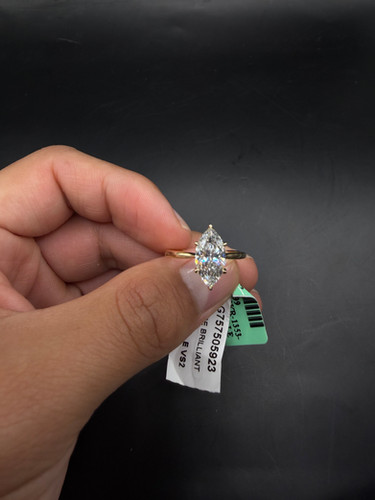
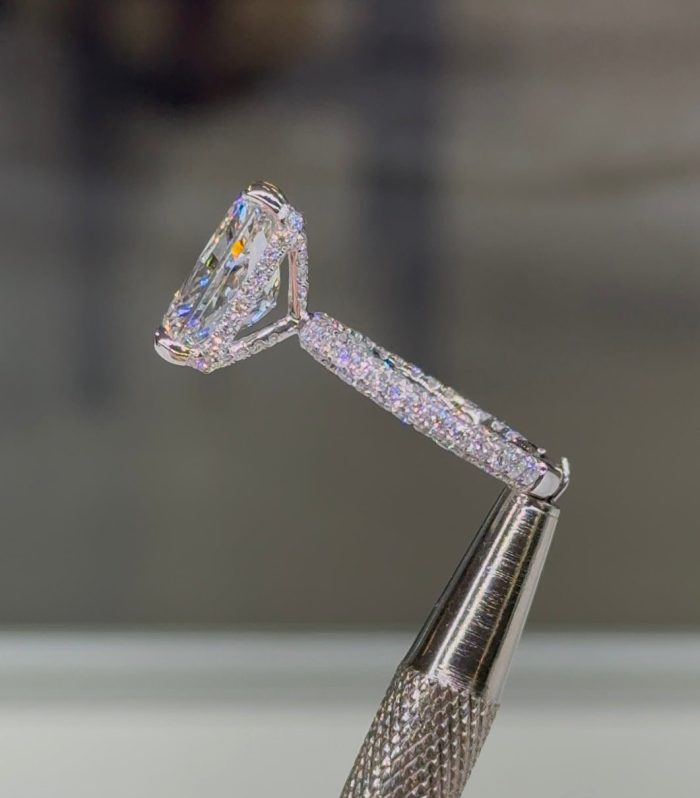
The pear brilliant cut is one of the most distinctive diamond shapes. Its teardrop design combines a pointed tip with a rounded edge, creating a unique and elegant appearance.
At 2 carats, the pear shape appears larger than many other cuts of the same weight due to its elongated form. It also creates a natural slimming effect on the finger, enhancing overall elegance.
Set in 18K white gold, the cool tone of the metal enhances the diamond’s colorless brilliance, resulting in a clean and sophisticated look.
Is a Lab-Grown Diamond Right for You?
If you are looking for a high-quality diamond with exceptional brilliance at a more accessible price, a lab-grown diamond is an excellent option.
This 2-carat pear brilliant diamond ring offers premium specifications — D color, VS1 clarity, and Excellent cut — combined with modern craftsmanship and timeless design.
Whether for an engagement, a meaningful gift, or a personal investment in fine jewelry, this ring delivers lasting beauty, value, and elegance.







 The Raquel Radiant cut
$3,995.00
The Raquel Radiant cut
$3,995.00
 3ct lab pear engagement ring
$2,200.00
3ct lab pear engagement ring
$2,200.00
 4 Carat Total Round Brilliant 4 Prong Studs
$1,695.00
4 Carat Total Round Brilliant 4 Prong Studs
$1,695.00
 1.5ct lab marquee ring
$1,500.00
1.5ct lab marquee ring
$1,500.00
 Patek Philippe 5204G Grand Complications Split-Seconds Chronograph Perpetual Calendar
$194,073.95
Patek Philippe 5204G Grand Complications Split-Seconds Chronograph Perpetual Calendar
$194,073.95
 Audemars Piguet “50TH ANNIVERSARY” White Dial Rose Gold
$120,756.95
Audemars Piguet “50TH ANNIVERSARY” White Dial Rose Gold
$120,756.95
Reviews
There are no reviews yet.