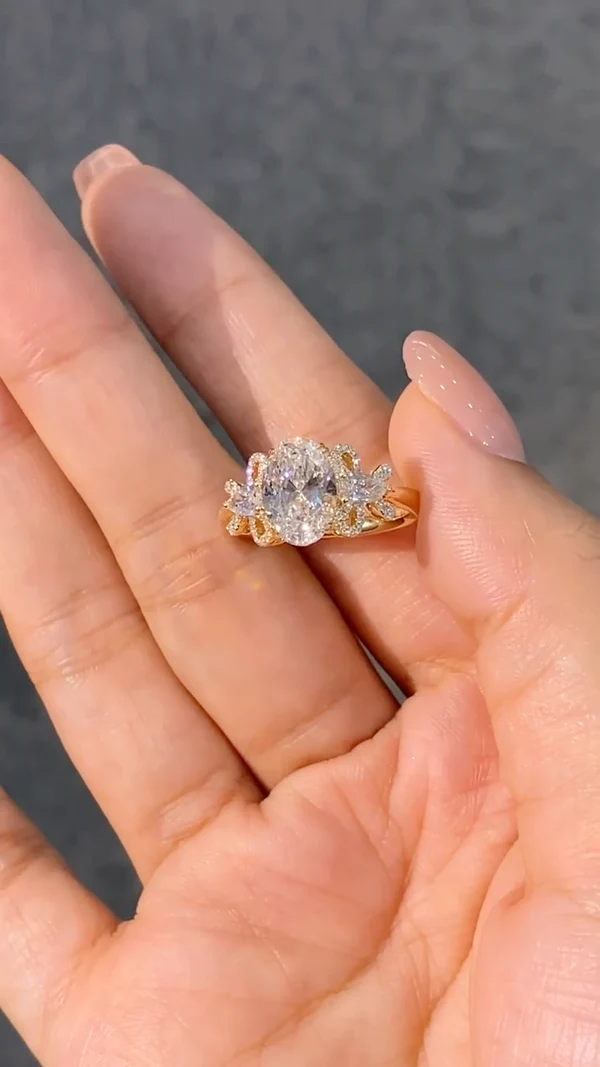

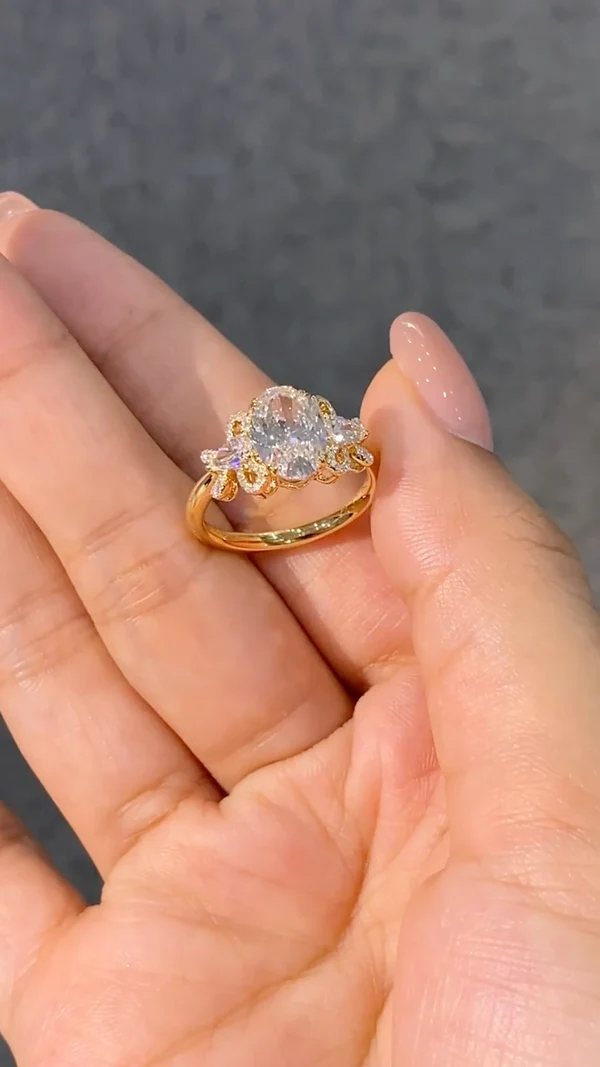
A ring featuring a 2-carat oval lab-grown diamond as the center stone, with a bow-shaped design on the band; graded as D color and VS1 clarity
$1,480.00 – $4,280.00Price range: $1,480.00 through $4,280.00
2 Carat Oval Brilliant Cut Lab-Grown Diamond Ring | D Color · VS1 · 18K Yellow Gold
Timeless elegance meets modern craftsmanship. Certified by the Gemological Institute of America.
Product Specifications
| Specification | Detail | What It Means |
|---|---|---|
| Diamond Type | Lab-Grown | Chemically identical to natural diamonds |
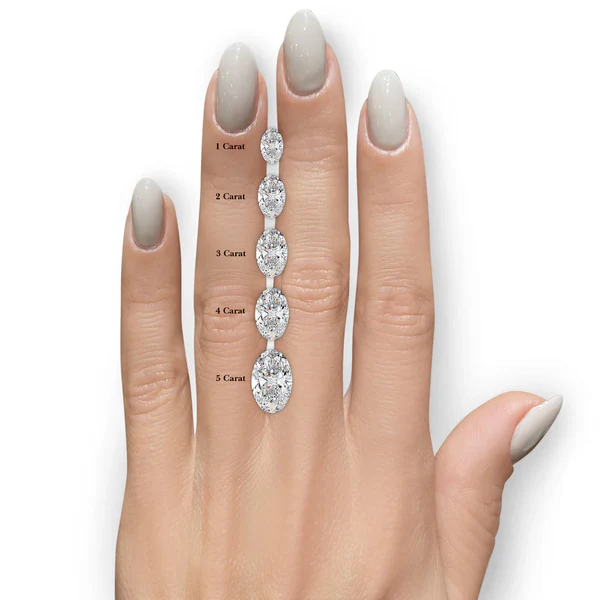
| Shape | Oval Brilliant Cut | Elongated silhouette that maximizes sparkle and finger coverage |
| Carat Weight | 2.00 ct | Bold, eye-catching center stone |
| Cut Grade | Excellent (EX) | Maximum brilliance and light performance |
| Color Grade | D Color | Completely colorless — the finest grade possible |
| Clarity Grade | VS1 | Inclusions invisible to the naked eye |
| Setting | 18K Yellow Gold | Warm, durable, and timelessly lustrous |
| Production Time | 1–2 Weeks | Handcrafted to order |
Shipping & Returns
Free Worldwide Shipping Every order ships free to all countries and regions — no minimum spend, no hidden fees.
Fast International Delivery All orders are dispatched via FedEx or DHL Express Priority. International shipments typically arrive within 3–5 business days. As soon as your order ships, our team will send you a tracking number so you can follow your package every step of the way.
30-Day Hassle-Free Returns Not completely in love with your ring? Return it within 30 days — no questions asked. We cover all return shipping costs.
A Complete Guide to Lab-Grown Diamonds
Lab-grown diamonds have reshaped the fine jewelry industry over the past decade. They deliver the same certified brilliance and quality as naturally mined diamonds — at a price that makes larger, higher-quality stones genuinely attainable. Here’s everything you need to know.
What Are Lab-Grown Diamonds?
Lab-grown diamonds — also called synthetic or cultured diamonds — are real diamonds, not imitations or simulants. They are formed through the same fundamental process as natural diamonds, sharing identical physical, chemical, and optical properties. The sole difference is origin: they grow in a controlled laboratory setting rather than deep within the earth over millions of years.
Because they can be produced at scale, lab-grown diamonds are considerably more affordable than mined stones — making a 2-carat oval diamond like this one accessible to a far wider range of buyers without compromising on quality.
How Are Lab-Grown Diamonds Made?
There are two primary methods used to create laboratory diamonds:
Chemical Vapor Deposition (CVD) A diamond seed is placed inside a vacuum chamber filled with carbon-rich gases. When heated to temperatures between 700°C and 900°C, carbon atoms gradually deposit onto the seed layer by layer — think of it as a fine mist of carbon slowly building into a diamond crystal. This method allows for precise control over the diamond’s growth and quality.
High Pressure High Temperature (HPHT) This method closely mimics the natural diamond formation process. Intense pressure and heat are applied to a diamond seed, causing the crystal to grow outward — replicating the extreme conditions found hundreds of miles beneath the Earth’s surface.
Once grown, the rough diamond is cut and polished using the same expert techniques applied to naturally mined stones. There is theoretically no limit to the size or quantity of diamonds that can be produced this way.